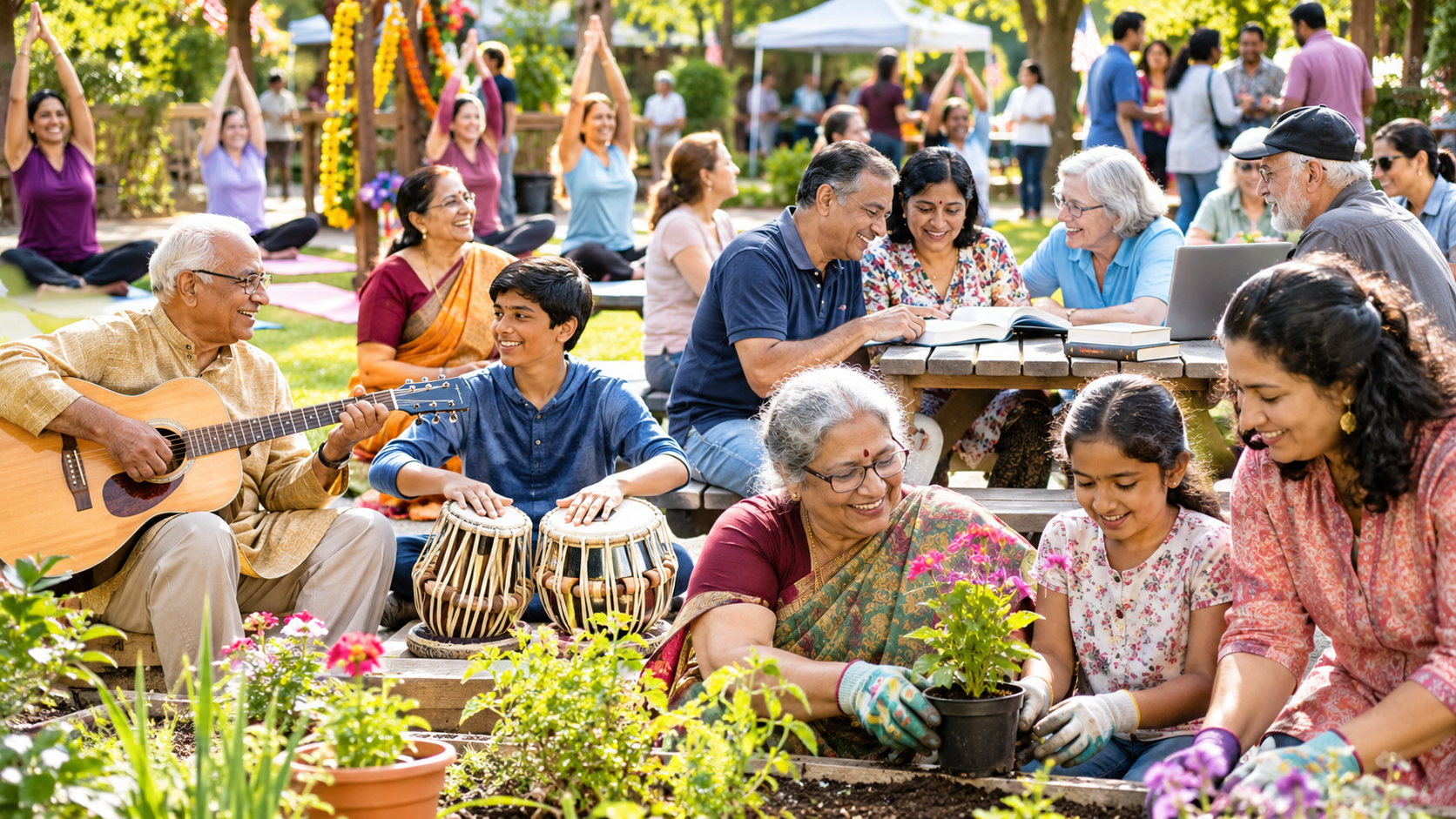
Life Is a Journey of Learning, Relationships, and New Experiences
As we move through different stages of life, our responsibilities, interests, friendships, and social circles naturally change.
During childhood, making friends often happens effortlessly. We meet people at school, in our neighborhoods, and through family gatherings. As young adults, colleges, workplaces, and social activities create opportunities to build relationships.
However, as we grow older, life becomes increasingly busy. Careers, raising children, caring for aging parents, and managing household responsibilities often take priority over personal interests and social connections.
Some friends move away. Others become occupied with their own responsibilities. Sometimes friendships gradually fade, not because anyone has done anything wrong, but simply because life takes people in different directions.
Losing touch with old friends is a natural part of life. But losing opportunities to make new friends does not have to be.
This is why community participation, exploring new hobbies, attending cultural events, and continuing to learn throughout life are so important.
At Salem India Wellness Community, we believe that a fulfilling life is not measured only by professional success or financial stability. It is also measured by our relationships, experiences, sense of belonging, and opportunities to grow.
1. Celebrating Indian Traditions While Embracing American Community Life
For Indian families living in the United States, maintaining cultural identity is important.
Our traditions, languages, festivals, food, music, and spiritual practices connect us to our heritage and help younger generations understand where their families come from.
Celebrating Diwali, Sankranti, Ugadi, Holi, Navratri, and other Indian festivals creates opportunities for families to come together and preserve meaningful traditions.
Celebrating Indian heritage
Embracing local community traditions
But cultural wellness should not stop there.
Living in America also provides wonderful opportunities to experience local traditions, meet people from different backgrounds, and participate in community activities.
Consider attending local events such as Fourth of July celebrations, Thanksgiving gatherings, Christmas festivals, neighborhood picnics, farmers markets, community concerts, library programs, and volunteer activities.
These experiences help us understand the community we live in while creating opportunities to build friendships beyond our familiar cultural circles.
We do not have to choose between preserving our Indian identity and embracing American culture. We can do both.
In fact, participating in both communities can enrich our lives and provide our children with a broader understanding of the world.
2. Friendships Change, but Our Ability to Build Relationships Should Continue
One of the challenges of adulthood is maintaining meaningful friendships.
People relocate for work, children grow older, interests change, and social opportunities become less frequent.
For immigrants, these changes can be particularly challenging because extended family members and childhood friends may live thousands of miles away.
Sometimes, we find ourselves depending on a very small circle of friends for social interaction.
While close friendships are valuable, expanding our social connections can improve our sense of belonging and provide emotional support.
Community activities create opportunities to meet people naturally, without the pressure of trying to make friends.
A gardening workshop might introduce us to someone who shares our love for plants. A walking group might connect us with a neighbor. A cooking class might lead to a friendship between families from entirely different cultural backgrounds.
Not every person we meet will become a lifelong friend, and that is perfectly fine.
Some relationships are built around shared activities, some provide mentorship, and others develop into deep friendships over time.
The important thing is to remain open to new relationships.
We should cherish old friendships while continuing to make room for new ones.
3. Lifelong Learning: Keeping Our Minds Curious and Engaged
Learning should never end with graduation or professional training.
Many adults spend years developing skills related to their careers but gradually stop exploring interests outside their professions.
A healthcare professional may become highly knowledgeable in medicine while never finding time to learn music. An engineer may spend decades solving technical problems but never explore gardening, painting, or creative writing.
These missed experiences represent opportunities for personal growth.
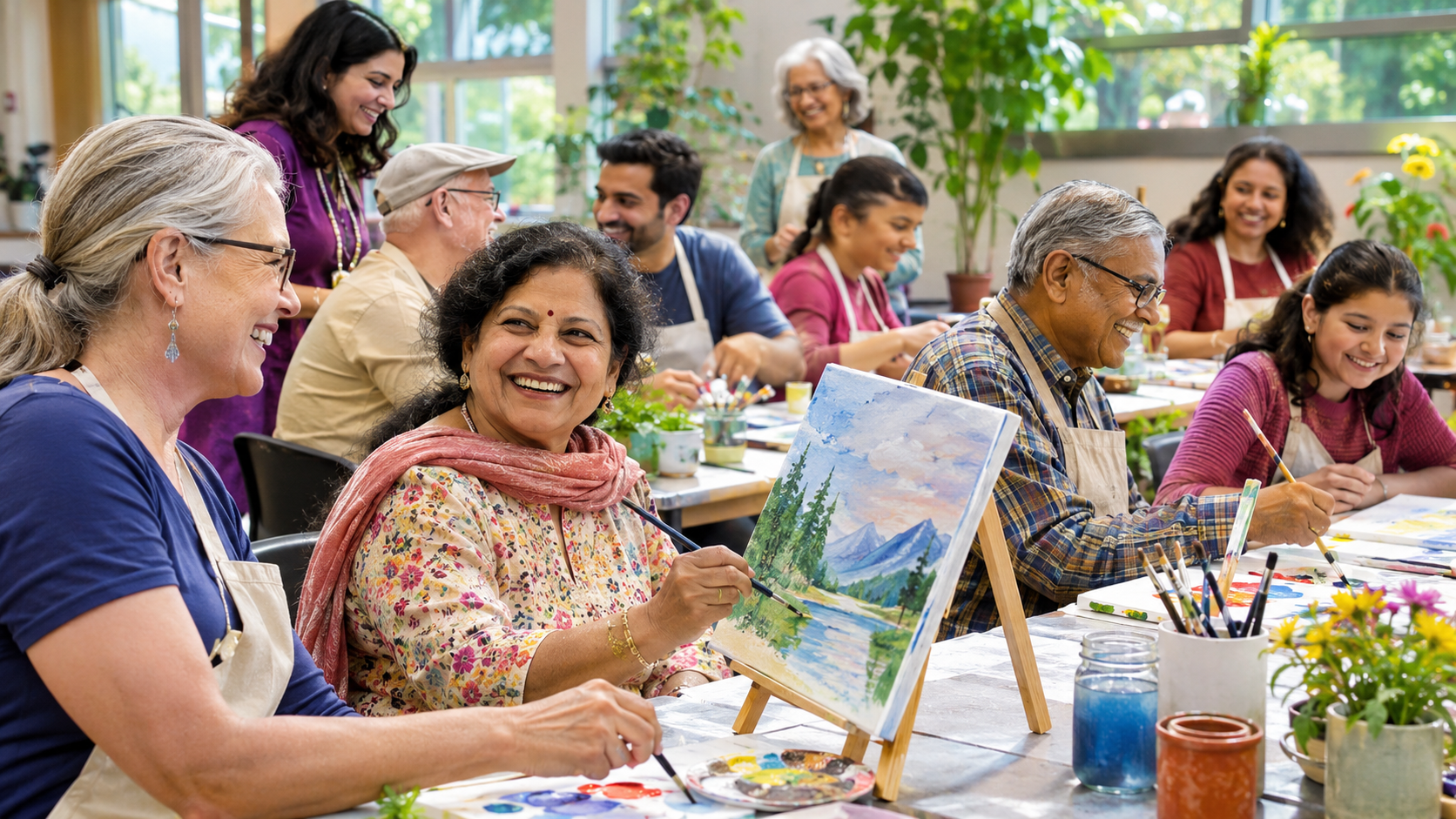
New experiences worth exploring
Art and creativity
Painting, crafts, photography
Gardening and nature
Plants, birdwatching, outdoor skills
Movement and wellness
Yoga, dance, walking, fitness
Practical and cultural skills
Cooking, languages, music
Learning something new challenges our brains to develop unfamiliar skills, adapt to new situations, and practice attention and memory.
Research on cognitive aging suggests that intellectually stimulating activities, physical exercise, and social engagement can support healthy cognitive functioning. However, no single hobby or class is guaranteed to prevent dementia or memory loss.
The greatest value of lifelong learning may be the combination of mental stimulation, enjoyment, social interaction, and personal accomplishment.
Imagine someone beginning to learn a musical instrument at age 60, joining a painting class at 70, or discovering birdwatching after retirement.
There is no age limit for curiosity.
We should encourage ourselves and our family members to become lifelong learners, not simply lifelong workers.
4. Community Participation Supports the Eight Dimensions of Wellness
At HWY Foundation, our community programs are guided by the eight dimensions of wellness.
Attending a community event is not merely entertainment. A thoughtfully designed activity can support several aspects of well-being simultaneously.
Dimension
How community participation helps
Physical
Walking, dancing, exercise, outdoor activities
Emotional
Friendship, encouragement, stress relief
Social
Building relationships and belonging
Intellectual
Learning new skills and exploring ideas
Spiritual
Reflection, meditation, cultural and spiritual gatherings
Occupational
Mentoring, volunteering, sharing skills and finding purpose
Environmental
Gardening, nature walks, community cleanups
Financial
Learning financial skills and accessing affordable community activities
For example, participating in a community gardening program may involve physical movement, learning about plants, connecting with neighbors, enjoying nature, and sharing produce.
One simple activity can contribute to multiple dimensions of wellness.
This is why we believe community activities should be diverse, inclusive, educational, and accessible to people of different ages and abilities.
5. Helping Our Children Become Confident, Culturally Aware, and Socially Connected
Children learn much more from what they experience than from what we tell them.
When children participate in Indian festivals, they learn about their family traditions, cultural values, and heritage.
When they participate in local American community activities, they develop familiarity with the society in which they are growing up.
When they interact with children from different backgrounds, they have opportunities to practice communication, cooperation, empathy, and respect.
Consider the difference between a child who attends only familiar family gatherings and one who also participates in community sports, library activities, volunteering, cultural performances, science workshops, and outdoor adventures.
Both may have loving families and meaningful experiences. However, exposure to a broader range of activities offers additional opportunities to discover interests, build confidence, and develop social skills.
As parents, our responsibility is not simply to prepare children for academic or professional success.
It is also to help them become curious, compassionate, adaptable, and responsible members of society.
6. Staying Connected as We Age
Social connection becomes especially important during retirement and later adulthood.
For many older adults, workplaces and family responsibilities previously provided regular social interaction. Retirement, relocation, loss of loved ones, or changes in mobility can reduce those opportunities.
Older adults visiting their children in the United States may face additional challenges, including unfamiliar transportation systems, language differences, and limited opportunities to meet peers.
Community activities can provide meaningful opportunities for engagement.
A weekly walking group, a traditional music gathering, a spiritual discussion, a gardening club, or a volunteer project can give people something enjoyable to anticipate.
Research has associated social isolation and loneliness with poorer physical and mental health outcomes, including increased risks of depression and cognitive decline.
Although community participation cannot eliminate every health risk, it can help people build supportive relationships and maintain a sense of purpose.
Growing older should not mean withdrawing from life. It can be an opportunity to explore interests that we never had time for earlier.
7. Moving Beyond Our Comfort Zones
It is natural to feel comfortable around people who speak our language, share our traditions, or have similar professional backgrounds.
These connections provide familiarity and emotional support, especially for immigrant families.
However, personal growth often occurs when we explore experiences outside our usual routines.
Attending a local community event where we know nobody may feel uncomfortable initially.
Joining a beginner dance class might feel intimidating. Learning a new language may seem difficult. Volunteering with people from unfamiliar backgrounds may require patience and understanding.
But these experiences can also help us develop confidence, adaptability, and empathy.
We do not need to abandon our comfort zones entirely. We simply need to expand them gradually.
One new activity, one new conversation, and one new friendship at a time.
8. From Attending Events to Building a Stronger Community
At Salem India Wellness Community, our vision extends beyond organizing cultural celebrations.
We want to create an environment where individuals and families can learn, contribute, share experiences, and support one another throughout different stages of life.
We envision community gatherings that bring together Indian traditions, local American experiences, health education, creative hobbies, intergenerational activities, and volunteer opportunities.
We also recognize that every individual has something valuable to contribute.
A retired teacher may enjoy mentoring children. A healthcare professional may offer a wellness workshop. A musician may introduce families to traditional Indian music. A gardening enthusiast may teach others how to grow vegetables in Oregon's climate.
Community organizations become stronger when participants are not simply spectators but active contributors.
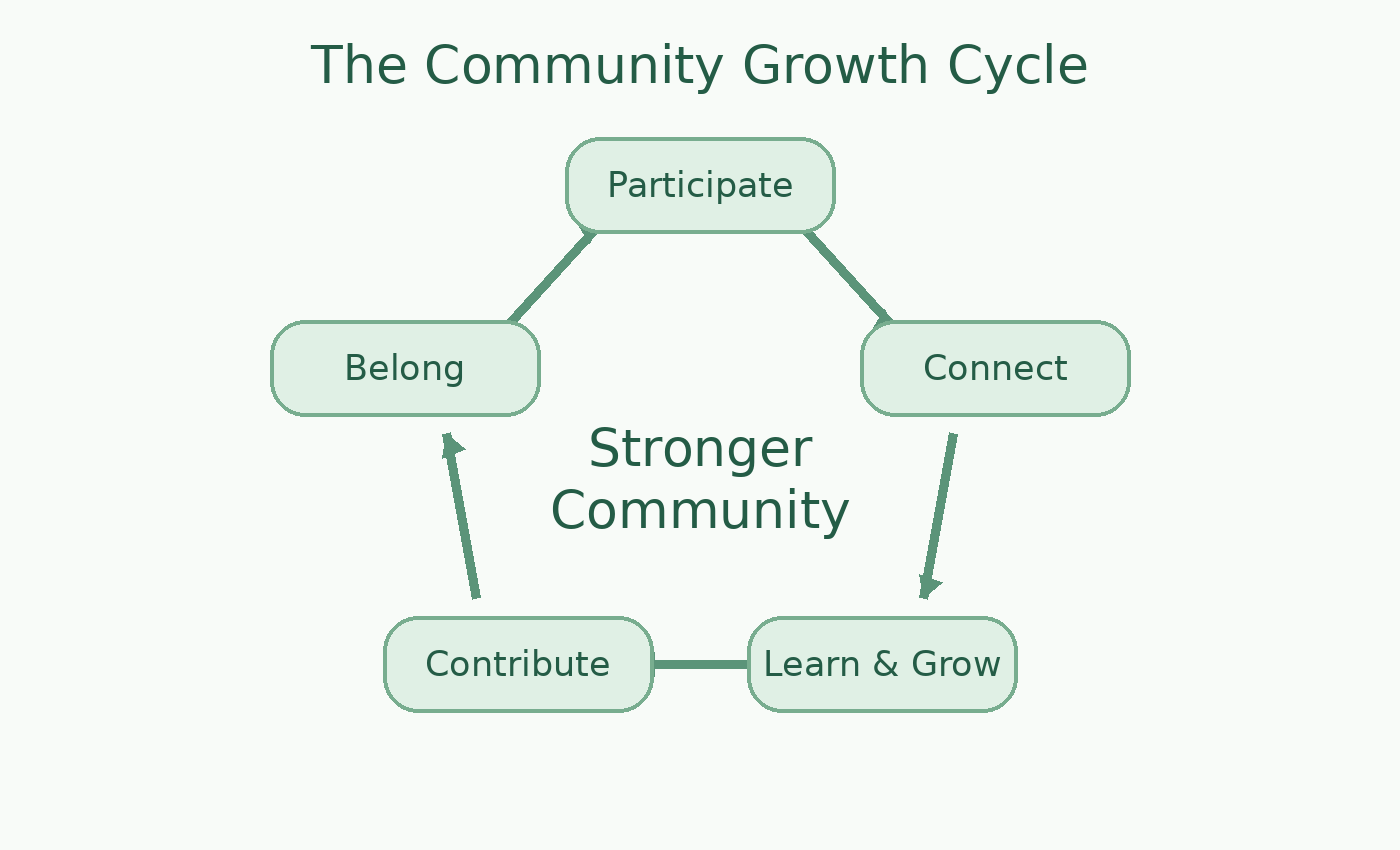
This creates a positive cycle:
A continuous cycle of participation, connection, learning, contribution, and belonging.
When people feel welcomed, they are more likely to participate. When they participate, they develop relationships. Those relationships encourage learning, volunteering, and greater community involvement.
Over time, the entire community benefits.
9. A Simple Challenge: Try Something New Every Month
Meaningful personal growth does not always require major lifestyle changes.
Sometimes, it begins with one small decision.
We encourage every family to consider participating in at least one activity each month that is different from their usual routine.
It could be an Indian cultural celebration, an American community festival, a public library workshop, a fitness class, a neighborhood cleanup, or a new hobby.
Your monthly community growth challenge
Choose a few actions to try this month.
Attend one new community event
Meet and speak with someone new
Try a hobby or educational class
Participate in an activity outside your usual cultural circle
Invite someone who may be feeling isolated
Share a skill or volunteer your time
Over a year, these small steps can create dozens of opportunities to learn something new, develop friendships, and create meaningful memories.
The goal is not to fill every weekend with activities.
It is to build a sustainable habit of curiosity, participation, and connection.
Conclusion: A Meaningful Life Is Built Through Experiences and Relationships
Life continually changes.
Our children grow up. Our careers evolve. Friends move away. Family responsibilities shift. Eventually, many of us enter retirement and discover new opportunities to spend our time.
Through all these changes, the ability to learn, connect, contribute, and experience new things remains valuable.
We should preserve our cultural roots while remaining open to the world around us.
We should appreciate our longtime friends while welcoming new relationships.
We should take pride in our professional accomplishments while continuing to explore interests beyond our careers.
And we should encourage every generation—from young children to older adults—to remain active participants in community life.
At Salem India Wellness Community, we believe that a healthier and happier future begins when people come together—not only to celebrate, but also to learn, support one another, and grow together.
Because ultimately, quality of life is not just about how long we live.
It is about how meaningfully we live, the relationships we nurture, and the experiences we share along the way.
Salem India Wellness Community — An initiative of HWY Foundation